
How to Choose the Right Promotional Products Supplier for Your Organisation
Discover how to find a reliable promotional products supplier in Australia — from vetting quality to managing timelines and budgets.

Written by
Chase Nakamura
Tech & Electronics
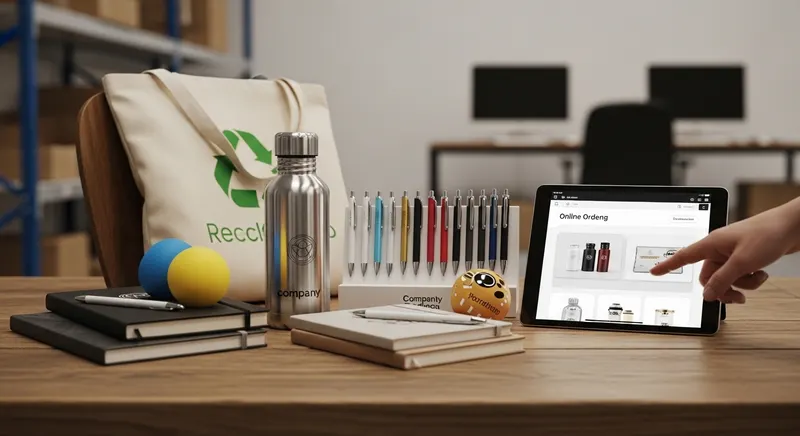
Choosing the right promotional products supplier can make or break your next campaign, event, or brand activation. Whether you’re a Sydney-based corporate team planning a conference giveaway, a Brisbane primary school organising sports day t-shirts, or a Melbourne council sourcing eco-friendly merchandise for a community event, the supplier you choose will directly impact the quality of your branded items, your budget outcomes, and whether everything arrives on time. With so many options available across Australia, it pays to know exactly what to look for — and what questions to ask — before you commit.
What Does a Promotional Products Supplier Actually Do?
A promotional products supplier is a company (or individual) that sources, decorates, and fulfils orders for branded merchandise. They sit between the manufacturer (often overseas, in countries like China or Taiwan) and the end customer — that’s you. A good supplier doesn’t just print your logo on a mug. They advise you on the right products for your audience, manage artwork files and proof approvals, oversee quality control, and ensure delivery meets your deadline.
Some suppliers operate as full-service distributors, offering a broad catalogue across dozens of product categories — from custom water bottles and branded travel mugs through to work polo shirts and tote bags and backpacks. Others specialise in specific niches, such as tech accessories, eco-friendly merchandise, or corporate gifting. Understanding which type of supplier suits your needs is the first step in making a smart decision.
The Difference Between Suppliers, Distributors, and Decorators
It’s worth clarifying the terminology before diving deeper. A decorator focuses on applying branding to products — screen printing, embroidery, laser engraving, sublimation. A distributor sources products and manages the full supply chain. Many suppliers in Australia operate as both, handling everything in-house or through trusted local and offshore partners. When comparing options, ask whether decoration is done locally or offshore, as this affects turnaround times and quality consistency.
Key Factors to Evaluate When Selecting a Promotional Products Supplier
Not all suppliers are created equal. Here’s what to assess before placing an order.
1. Product Range and Catalogue Depth
The best suppliers offer a broad, well-curated catalogue. Look for variety across product categories relevant to your needs. If you’re planning a trade show, for instance, you’ll want a supplier that can handle everything from teardrop banners and branded USB sticks to novelty USB flash drives and sticky notepads — all in one order. Consolidating your purchase with a single supplier simplifies logistics, reduces freight costs, and makes reordering far easier down the track.
2. Decoration Method Expertise
Different products require different decoration techniques. Embroidery suits structured caps and polo shirts. Screen printing is ideal for custom t-shirt printing on garments. Laser engraving works beautifully on metal drinkware and tech accessories. Sublimation enables full-colour designs on items like promotional stickers and gym towels. A knowledgeable supplier will guide you toward the most appropriate method for your product and artwork — and will flag any potential issues (like a complex gradient logo that won’t translate well to embroidery) before production begins.
3. Minimum Order Quantities (MOQs)
MOQs vary significantly across product types and suppliers. Some items, like branded umbrellas with logos or races jackets, may have MOQs of 25–50 units. Basic screen-printed t-shirts might start at 12 pieces. Tech items such as USB extender cables or promotional tech gadgets often have higher MOQs when sourced offshore. Always confirm MOQs upfront — especially for smaller organisations like charities or community sporting clubs who may only need 20–30 items.
4. Turnaround Times and Rush Order Capability
Timing is everything in this industry. Most standard orders take 10–15 business days from artwork approval. However, if you’re up against a tight deadline — say, an event next week — you’ll need a supplier with rush capabilities. Some local decorators offer same-day promotional product printing in Adelaide and similar fast-turnaround services in other capital cities. Confirm the production timeline in writing before placing your order, and always factor in freight time, especially for organisations in regional areas of Queensland, Western Australia, or the Northern Territory.
5. Artwork Support and Proof Approval Process
A professional supplier will have a clear, structured artwork process. They should request vector files (AI, EPS, or high-resolution PDF) for print and embroidery work, provide a digital proof for your approval before production begins, and flag any artwork issues early. Be wary of suppliers who skip the proof stage — this is where errors get caught, and without it, you’re taking on significant risk. Ask whether artwork setup fees apply and whether those fees are waived on repeat orders.
6. Quality Assurance and Product Samples
For larger orders — particularly anything over $2,000 in value — it’s worth requesting a pre-production sample before committing to full production. This is especially important for garments, where sizing, fabric weight, and print placement all need to be verified. Reputable suppliers will either provide samples at cost (often refunded on order placement) or point you to stock samples so you can assess quality in person. This step is non-negotiable for corporate gifting or situations where the product reflects directly on your brand.
Budget Planning: What Should You Expect to Pay?
Pricing in the promotional products industry is driven by a handful of variables: the product itself, decoration method, number of print colours or stitch count, order quantity, and freight. Bulk pricing tiers mean the per-unit cost drops significantly as quantities increase. A branded pen might cost $3.50 each at 50 units but drop to $1.20 each at 500.
It also pays to understand seasonal promotional product purchasing patterns in Australia. Demand spikes around the end of financial year (June), the lead-up to Christmas (October–December), and during major conference and events seasons. Ordering outside these peak windows often means better pricing, faster turnarounds, and more supplier attention.
Don’t forget to budget for:
- Setup/screen fees: Typically $30–$80 per colour, per position
- Freight: Can range from $15 for small orders to $150+ for bulk shipments
- Sample costs: Usually $20–$60 per item
- Artwork fees: If your files aren’t print-ready, redraw fees may apply
Red Flags to Watch Out For
Knowing what to avoid is just as important as knowing what to look for in a promotional products supplier.
- No proof process: If a supplier jumps straight to production without showing you an artwork proof, walk away.
- Vague delivery timeframes: “A few weeks” is not an acceptable answer. Get specific dates in writing.
- No ABN or Australian business registration: Always verify you’re dealing with a legitimate Australian business.
- Stock photography that doesn’t match reality: Ask for actual photos of completed orders from past clients, not just stock images.
- No returns or quality guarantee policy: Reputable suppliers will have a clear process for addressing quality issues or errors.
Questions to Ask Your Promotional Products Supplier Before Ordering
Before placing any order, run through this checklist:
- What is your standard turnaround time from artwork approval to dispatch?
- Do you produce locally or offshore — and does that affect my timeline?
- What are your MOQs for this product and decoration method?
- Can I see a digital proof before production begins?
- What happens if the finished product doesn’t match the approved proof?
- Do you have experience supplying to schools, government departments, or organisations like mine?
- Can you provide references or examples of past orders?
- What file formats do you accept for artwork?
Finding a Supplier That Understands Your Industry
Different sectors have different needs, and the best promotional products supplier for your organisation is one that understands your specific context.
A university in Canberra sourcing orientation week merchandise needs a supplier who understands large, time-sensitive orders across multiple product categories — from branded totes to stationery items reflecting current trends. A Gold Coast hotel chain sourcing staff uniforms and guest amenities needs someone experienced in garment sizing runs, consistent colour matching, and split shipments across multiple locations. A Perth sporting association ordering end-of-season awards, polo shirts, and team bags needs a supplier who can handle a multi-product brief without things falling through the cracks.
Always share your full brief — including quantities, budget, deadline, and how the items will be used — so the supplier can recommend the right solutions from the start.
Conclusion: Key Takeaways for Choosing a Promotional Products Supplier
Finding the right promotional products supplier isn’t just about the lowest price. It’s about finding a reliable partner who can deliver quality products, on time, that genuinely represent your brand well. Here’s a quick summary of what to prioritise:
- Vet product range and decoration expertise before committing — a supplier should be able to advise you, not just take your order
- Confirm MOQs, timelines, and artwork requirements in writing before any money changes hands
- Request proofs and, where appropriate, physical samples to protect your investment on larger orders
- Plan around peak seasons to avoid delays and access better pricing and supplier availability
- Ask industry-specific questions to ensure your supplier understands the unique needs of your organisation, event, or campaign
A strong relationship with a knowledgeable, responsive promotional products supplier is one of the most valuable assets your organisation can have — especially when the next deadline is closer than you’d like.