
How to Build a Trade Show Stand That Actually Works: A Step-by-Step Guide for First-Time Exhibitors
First time exhibiting? Follow our practical step-by-step guide to building a trade show stand that attracts visitors, sparks conversations, and drives real results.

Written by
Quinn Mwangi
Event Merchandise
Before You Book the Space: What Most First-Timers Get Wrong
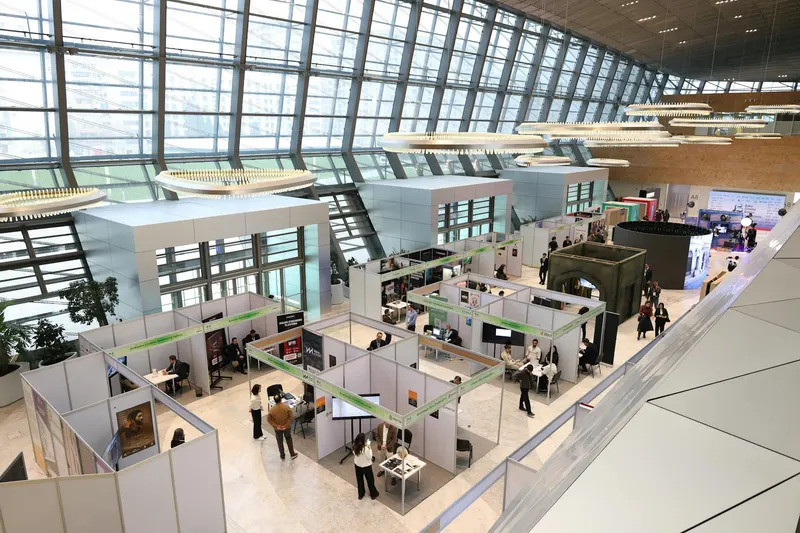
Exhibiting at a trade show for the first time is genuinely exciting. Whether you’re heading to a Melbourne industry expo, a Brisbane business summit, or a Sydney trade fair, the opportunity to put your brand in front of hundreds of potential clients in a single day is hard to beat. But the gap between a stand that buzzes with activity and one that sits quietly while foot traffic wanders past is almost always the result of decisions made weeks — sometimes months — before the event opens its doors.
The biggest mistake first-time exhibitors make isn’t choosing the wrong banner or forgetting to bring enough business cards. It’s treating the trade show stand as a last-minute logistics exercise rather than a strategic marketing investment. This guide walks you through the process step by step, so you can avoid the pitfalls that catch most newcomers out and give your brand the best possible start on the floor.
Step 1: Define What Success Looks Like Before You Spend a Dollar
This sounds obvious, but most first-time exhibitors skip it entirely. Before you order a single item or design a single display, get crystal clear on what you want to achieve at this specific event.
Are you there to generate qualified leads? Launch a new product? Build brand awareness in a market where you’re not yet well known? Reconnect with existing clients? The answer to that question changes almost every decision you’ll make about your stand — including the promotional products you choose, the way you brief your team, and how you measure success afterwards.
Write down three concrete goals. For example:
- Collect contact details from at least 80 qualified prospects
- Have meaningful conversations with five key industry contacts
- Distribute a hero product to every visitor who engages for more than two minutes
Once you have those goals in writing, every subsequent decision becomes easier. You’re no longer guessing what you need — you’re working backwards from an outcome.
Step 2: Understand Your Space Before You Design Anything
Exhibition organisers provide a floor plan and a stand specification document. Read it carefully. The dimensions of your space, the location relative to entrances and high-traffic pathways, the height restrictions, and the services available (power, internet, lighting) all directly affect how your stand should be designed and what you can physically fit within it.
A 3x3 metre shell scheme stand operates very differently from a 6x6 open-plan space. In a shell scheme, your branded backdrop and table setup do most of the work. In a larger open plan space, you have more flexibility — but also more responsibility to fill the area in a way that feels intentional rather than sparse.
Common pitfall: Ordering pull-up banners sized for a 3-metre space when you’ve actually booked a 6-metre stand, or vice versa. Double-check your measurements with the event organiser before placing any display orders.
Also consider your stand’s position on the floor. A corner stand gets foot traffic from two directions — fantastic for visibility, but it means your branding needs to work from multiple angles. A stand tucked at the end of a quieter aisle needs stronger visual signals to draw people in from further away.
Step 3: Plan Your Merchandise in Three Tiers
This is the framework that separates thoughtful exhibitors from those who end up with a table covered in random branded items that no one particularly wants. Structure your trade show stand merchandise across three clear tiers.
Tier One: The Hero Item
This is your signature giveaway — the one product that represents your brand at its best and that visitors will genuinely want to keep. It should be well-made, useful in everyday life, and branded in a way that feels considered rather than slapped on.
Strong hero items for the Australian market include insulated drink bottles, quality tote bags, bamboo travel mugs, and wireless charging pads. Choose something that reflects your industry and your brand values. A sustainability consultancy handing out single-use plastic items, for example, sends an unintentionally contradictory message.
Your hero item should be reserved for genuine conversations — not handed out at the door to everyone walking past. This scarcity gives it perceived value and gives your team a natural reason to engage visitors in conversation before offering the gift.
Tier Two: Supporting Products
These are the mid-range items you can distribute more freely — useful enough to be appreciated, but not so premium that handing them out broadly feels wasteful. Branded notebooks, quality pens, sticky note sets, and reusable coffee cups sit comfortably in this tier.
Supporting products serve a dual purpose: they keep people at your stand while they browse (something to pick up and examine buys you time to start a conversation), and they ensure that even visitors who don’t qualify as hot leads still leave with something that carries your brand.
Tier Three: High-Volume Takeaways
These are your volume items — distributed freely to anyone who visits the stand. Branded lollies, mints, seed packets, or a simple branded notebook insert are popular choices. These aren’t meant to impress; they’re meant to maintain a physical presence after the event ends. Even a simple branded pen on someone’s desk is a daily reminder of your company’s name.
Common pitfall: Spending the entire merchandise budget on one tier. A stand stocked only with premium hero items runs out quickly and misses the chance to maintain broad brand presence. A stand stocked only with cheap high-volume items misses the opportunity to make a lasting impression on the prospects who matter most.
Step 4: Brief Your Team Like You Mean It
Your trade show stand is only as effective as the people staffing it. This is particularly important for first-time exhibitors, where team members may not have clear expectations about their role on the floor.
Hold a briefing session at least a week before the event. Cover:
- The pitch: Everyone should be able to articulate what your business does in under 30 seconds, in plain language, without jargon
- The qualifying question: Train staff to quickly identify whether a visitor is a genuine prospect and steer the conversation accordingly
- The merchandise handout protocol: Be explicit about who gets the hero item, when, and why — and make sure everyone follows the same approach
- Lead capture: Whether you’re using a badge scanner, a sign-up form, or a business card collection method, everyone needs to know the process and use it consistently
Common pitfall: Allowing team members to spend the day chatting to each other behind the table, checking their phones, or eating lunch at the stand. These are the fastest ways to make your trade show stand look uninviting. Assign break times, enforce a no-phones-at-the-stand rule, and make sure someone is always visibly engaged and approachable.
Step 5: Think About the Visual Experience in Layers
Your stand’s visual presentation is the first impression you make on someone walking the floor — often from five or ten metres away. Think of it in layers, working from the furthest visible point to the closest point of engagement.
Layer one — visibility from a distance: Your primary signage (backwall display, suspended sign if permitted, large format banner) needs to communicate your brand name and a single clear message. Don’t try to fit your full service offering onto a banner that someone will read from across a crowded hall. Brand name, tagline, and a strong visual. That’s it.
Layer two — mid-range engagement: As visitors approach, they should see displays, product demonstrations, or visual storytelling that gives them a reason to slow down. Digital screens, physical product displays, or a well-styled table setup all work well here.
Layer three — close-up interaction: This is where your merchandise, brochures, and team members come into play. Once someone is at your stand, the conversation and the tangible items they can pick up and engage with become the priority.
Common pitfall: Overloading every layer with information. A cluttered stand feels chaotic and makes it hard for visitors to know where to look. Choose one primary focus for each layer and let it do the work.
Step 6: Build Your Pre-Event and Post-Event Plan
A trade show stand doesn’t exist in isolation. The most effective exhibitors treat the event as the centrepiece of a broader campaign that runs before and after the show itself.
Before the event: Use social media, email newsletters, and your website to let your audience know you’ll be exhibiting. Share your stand number, the event details, and — if appropriate — a teaser of what you’ll be giving away. This drives pre-arranged meetings and ensures that warm leads make a point of finding you on the floor.
After the event: The leads you collect at the stand are only valuable if you follow up on them promptly. Build a follow-up sequence before you arrive at the event — don’t leave it until you’re back in the office, exhausted and behind on your regular workload. Aim to make first contact within 48 hours of the event closing.
Step 7: Debrief Honestly and Improve for Next Time
After the event, gather your team for a debrief while the experience is still fresh. What worked? What didn’t? Which merchandise items generated the most conversations? Which giveaways were left untouched at the end of the day? Did visitors understand what your business does from looking at the stand, or did team members have to explain it repeatedly?
Document everything. Your notes from a Brisbane expo in March will be invaluable when you’re planning your next trade show stand for a Sydney event in August. The exhibitors who consistently improve their results aren’t necessarily the ones with the biggest budgets — they’re the ones who treat every event as a learning opportunity and refine their approach each time.
A Quick Checklist Before You Head to Your Stand
Use this list in the final days before the event:
- Stand dimensions confirmed with organiser ✓
- All display materials ordered with delivery buffer time ✓
- Merchandise ordered across all three tiers ✓
- Team briefed on pitch, lead capture, and merchandise protocol ✓
- Lead capture system tested and ready ✓
- Pre-event social media posts scheduled ✓
- Post-event follow-up sequence drafted and ready ✓
- On-stand survival kit packed (gaffer tape, scissors, extension cords, breath mints, water, phone chargers) ✓
Final Thought: Your Stand Is a Marketing Investment, Not a Cost
The licence fee, the display materials, the promotional merchandise, the travel and accommodation — it adds up quickly. But a well-planned trade show stand, staffed well and supported by the right merchandise strategy, can deliver a return that far outpaces the investment. The exhibitors who see consistent results aren’t necessarily spending more than those who don’t — they’re spending smarter, planning further in advance, and showing up with a clear purpose.
Get those foundations right from your very first event, and you’ll be building on a strong platform every time you exhibit.