
How to Find and Choose the Right Stationery Supplier for Custom Branded Products: A Step-by-Step Guide
First time buying branded stationery for your business or event? Follow this practical guide to avoid costly mistakes and find the right supplier in Australia.

Written by
Claire Mahmoud
Stationery & Office
What You Actually Need Before You Start Searching
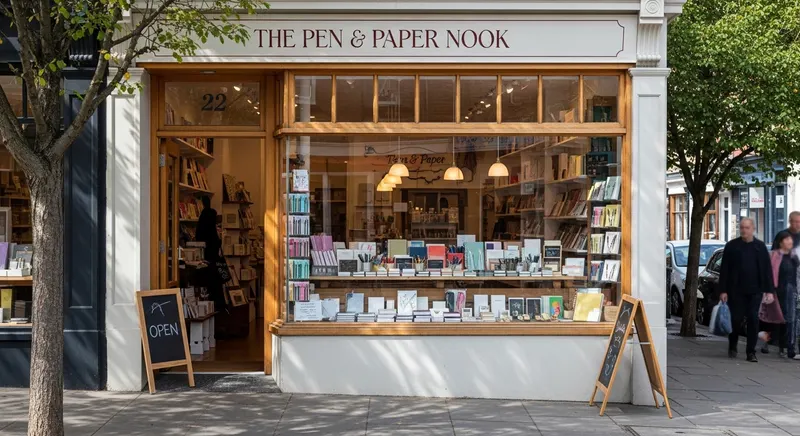
Every year, marketing coordinators, school administrators, and small business owners across Australia make the same costly mistake: they type “stationery shop near me” into Google, walk into the first result, and discover — sometimes the hard way — that retail stationery stores aren’t equipped to handle custom branded orders. Understanding the difference before you begin your search will save you time, money, and a fair amount of frustration.
This guide walks you through the entire decision-making process, from clarifying exactly what you need to receiving your finished order. Whether you’re sourcing branded notebooks for a Melbourne corporate retreat, custom pens for a Brisbane school fundraiser, or a full stationery set for a Sydney conference, these steps apply across the board.
Step 1: Define Your Brief Before You Contact Anyone
The single most common mistake first-time buyers make is approaching a supplier without a clear brief. Before you search for a stationery shop near me or start requesting quotes, get these details locked in:
Quantity
Promotional stationery is produced in bulk, and pricing is tiered accordingly. The cost per unit for 100 branded pens is significantly higher than for 500. Knowing your approximate quantity upfront will help you get accurate quotes and avoid sticker shock.
Deadline
Work backwards from your event date or distribution date. Custom stationery — particularly items that require mould setup, embossing, or specialty decoration — can take anywhere from five business days to four weeks, depending on the product and the supplier’s production schedule. If you’re ordering during peak periods like the lead-up to Christmas, end-of-financial-year, or the start of the school year, add buffer time.
Decoration Method
Not all branding is created equal. A plastic ballpoint pen can be pad printed. A metal executive pen is better suited to laser engraving. A premium hardcover notebook might be debossed or foil stamped. Knowing at least roughly what aesthetic you’re after will help you shortlist appropriate products and suppliers.
Artwork Readiness
Do you have your logo in a vector format (AI, EPS, or high-resolution PDF)? If not, sort this before you contact suppliers. Most promotional stationery suppliers require vector artwork to reproduce logos cleanly. Sending a JPEG exported from a Word document will slow down your order and may incur artwork fees.
Step 2: Understand What “Local” Actually Means for Branded Stationery
When people search for a stationery shop near me, they’re often hoping for a supplier they can visit in person, have a conversation with, and perhaps see samples before committing. That instinct is completely reasonable — especially for larger or more complex orders.
Here’s the reality of how the Australian promotional stationery market works: most reputable suppliers operate nationally, with account managers or showrooms in major cities like Sydney, Melbourne, Brisbane, Perth, and Adelaide, while their production and decoration is handled at specialist facilities. This is not a flaw in the system — it’s actually how you get better quality and better pricing than a general retail shop could offer.
What to look for when assessing a supplier’s local presence:
- Australian-based customer service: Can you call or email someone in Australia during business hours who can actually answer technical questions?
- Local samples: Can the supplier send you physical samples of the product you’re considering before you commit to a full order?
- State-specific account management: For ongoing or high-volume requirements, having a dedicated account manager who understands your organisation and can meet in person is genuinely valuable.
Don’t dismiss an online-first supplier simply because they don’t have a shopfront near you. Many of the best promotional stationery options in Australia are delivered with exceptional service entirely through digital channels.
Step 3: Know the Product Categories Available to You
Promotional stationery is a far broader category than most first-time buyers realise. Walking into a retail store will show you off-the-shelf products. A promotional supplier opens up an entirely different inventory. Here’s a breakdown of the main categories worth knowing:
Writing Instruments
Custom pens remain one of Australia’s most popular promotional products — and for good reason. They’re cost-effective, practical, and used repeatedly, which means ongoing brand visibility. Options range from entry-level plastic ballpoints suitable for conferences and trade show giveaways, through to premium metal rollerball pens appropriate for client gifts or executive welcome packs.
Notebooks and Journals
Branded notebooks have surged in popularity as workplaces have embraced more considered, design-forward branded merchandise. Spiral-bound options work well for technical or operational teams. Hardcover journals with debossed logos suit professional services firms and corporate gifting. Recycled or sustainably sourced notebooks are increasingly requested by organisations with environmental commitments.
Desk Accessories
Branded sticky notes, page flag sets, mouse pads, and desk organisers all fall under the promotional stationery umbrella. These products tend to have long dwell times on desks, meaning your brand remains visible for months or even years after distribution.
Planner and Calendar Products
Custom diaries, wall planners, and desk calendars are strong performers for Australian businesses, particularly when distributed before the new year. These items carry your branding every single day across an entire year.
Specialty and Eco-Friendly Options
Recycled paper notebooks, seed paper notepads that can be planted after use, and pens made from sustainable materials are increasingly available and popular with organisations keen to align their merchandise with their sustainability values.
Step 4: Request Quotes the Right Way
Once you’ve identified two or three potential suppliers, approach them with your brief already prepared (see Step 1). A well-structured quote request will get you better, faster responses and allow you to make a genuine comparison.
Your quote request should include:
- Product type — be as specific as you can (e.g., “A5 hardcover notebook, approximately 80 pages, with debossed logo on front cover”)
- Quantity — give your target quantity and, if budget allows, ask for pricing at the next tier up (e.g., 250 and 500)
- Branding details — number of colours, placement, decoration method preference if you have one
- Deadline — your required delivery date and delivery location
- Artwork — let them know whether your artwork is vector-ready
Common pitfall: Comparing quotes without accounting for all inclusions. One supplier might quote a lower unit price but charge separately for artwork setup, print plates, or freight. Always ask for an all-inclusive landed cost to your delivery address.
Step 5: Evaluate Samples Before Committing
For orders of meaningful size — particularly anything over $500 — always request a physical sample or pre-production proof before approving your full order. This is especially important for:
- Colour accuracy: Screen representations of colours can vary significantly from printed reality. If your brand has specific PMS (Pantone Matching System) colours, confirm how the supplier handles colour matching.
- Product quality: A notebook that photographs beautifully in a supplier’s catalogue might feel cheap in person. Handling a sample before committing protects your investment and your brand’s reputation.
- Branding placement and size: What looks proportionally correct on a digital mockup doesn’t always translate perfectly to the physical product. A sample or proof lets you catch and correct these issues.
Reputable Australian promotional stationery suppliers will facilitate pre-production proofs as standard practice. If a supplier is reluctant to provide proofs or charges excessively for them, treat that as a warning sign.
Step 6: Understand Minimum Order Quantities and Pricing Tiers
This catches many first-time buyers off guard. Unlike a retail stationery shop where you can buy a single pen or one notebook, promotional stationery suppliers work with minimum order quantities (MOQs). These exist because custom decoration involves setup costs — setting up a print screen, engraving a laser file, or creating a debossing die — that need to be spread across enough units to make the process economically viable.
Typical MOQs in the Australian market:
- Branded pens: Often as low as 50–100 units
- Custom notebooks: Generally 50–250 units depending on the product
- Desk accessories: Varies widely, from 25 to 250+
Understanding price breaks is equally important. Most suppliers offer tiered pricing where the cost per unit drops at certain quantity thresholds. If you’re sitting just below a price break — say, ordering 180 units when 200 unlocks a lower rate — it’s often worth ordering the extra quantity to capture the saving.
Step 7: Plan for Delivery and Distribution
The final step that first-time buyers frequently overlook is logistics. Once your branded stationery is produced, it needs to get to you (or directly to multiple locations) on time and in good condition.
Key considerations:
- Single vs. split deliveries: Can the supplier ship directly to multiple offices or event venues? Many can, but it’s worth confirming and understanding any additional freight costs.
- Packaging: How will the items arrive? Bulk-packed in a single carton? Individually boxed? If you’re building event packs or welcome kits, the unboxing presentation matters.
- Lead time buffer: Build at least two to three business days of buffer between your expected delivery date and the date you actually need the items. Freight delays happen, particularly for deliveries to regional areas of Queensland, Western Australia, or the Northern Territory.
- Checking the order: When your delivery arrives, check the quantity and quality before your event. If there’s a production issue, you want to know immediately — not the morning you’re setting up your conference booth.
A Note on Reframing Your Search
The next time you find yourself searching for a stationery shop near me for branded merchandise, consider refining your search terms to better match what you actually need. Searching for “custom branded notebooks Australia,” “promotional pens with logo,” or “branded stationery supplier [your city]” will surface suppliers genuinely equipped to handle your requirements — rather than retail outlets that will politely explain they don’t do custom orders.
The Australian promotional products industry is mature, well-serviced, and competitive. With a clear brief, realistic timelines, and the step-by-step approach outlined above, sourcing high-quality custom stationery for your business, school, or organisation is a straightforward process — and the results, in terms of brand impression and professional polish, are well worth the effort.