
Promotional Product Warehousing for Multi-Location Businesses: A Complete Guide
Manage branded merchandise across multiple sites with ease. Discover how promotional product warehousing works for Australian businesses.

Written by
Tilly Garcia
Buying Guides & Tips
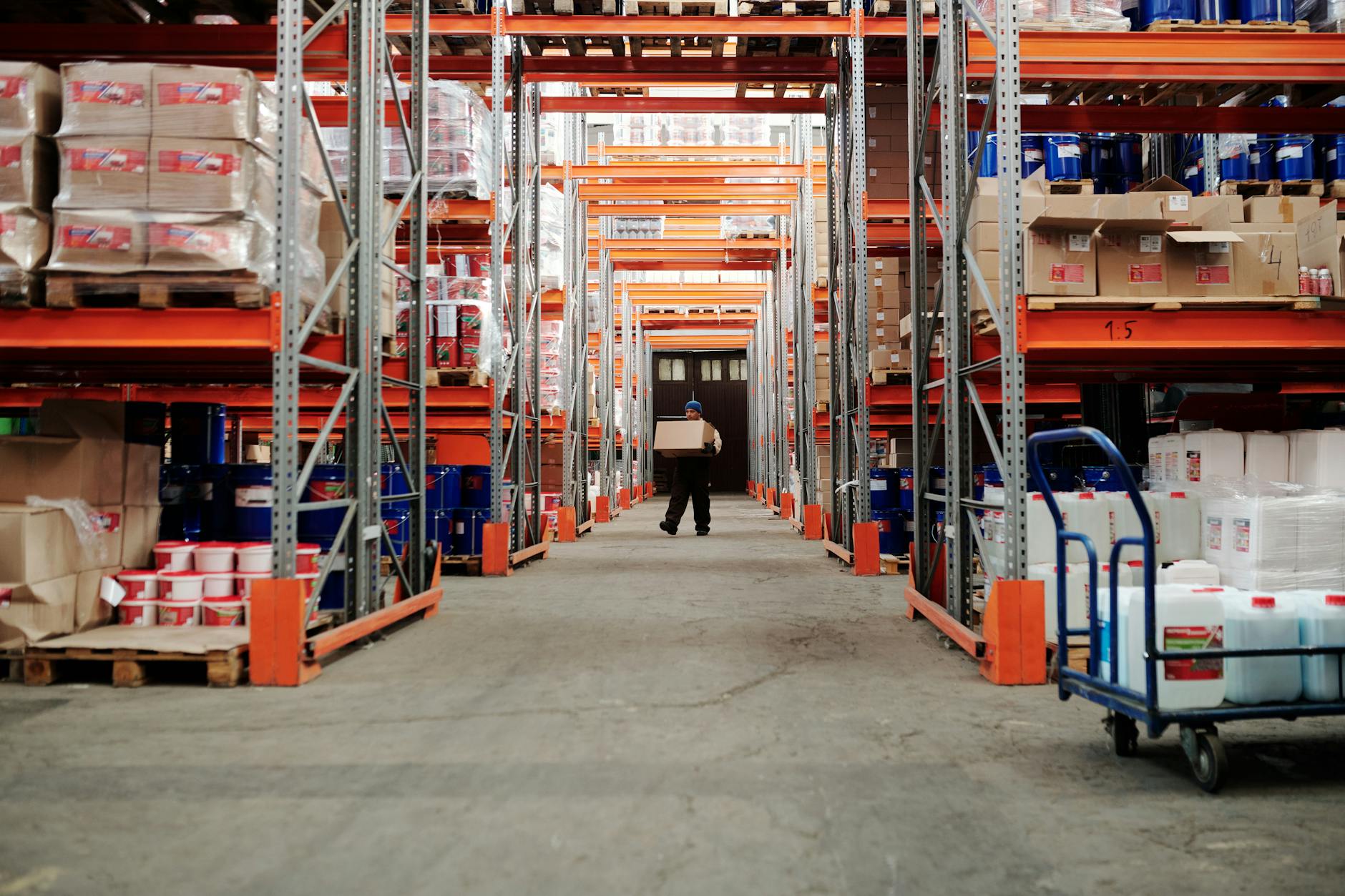
Managing promotional products across multiple office locations, retail sites, or school campuses is one of those logistical challenges that sneaks up on you. What starts as a straightforward order of branded merchandise quickly becomes a spreadsheet nightmare — who has the polo shirts, which branch is out of lanyards, and why did head office in Sydney order 2,000 pens that are still sitting in a storeroom six months later? For Australian organisations operating across multiple locations, promotional product warehousing is no longer a luxury — it’s a smart, strategic solution that saves money, reduces waste, and ensures your brand is always showing up consistently.
What Is Promotional Product Warehousing?
At its core, promotional product warehousing is a service where a supplier holds your pre-ordered, branded merchandise in their fulfilment facility on your behalf. Rather than ordering products reactively whenever a need arises — and dealing with MOQs, setup fees, and turnaround times every single time — you bulk order upfront, store the items with your supplier, and request dispatch to individual locations as needed.
Think of it like having your own branded merchandise warehouse, but without the overhead of leasing physical space or managing inventory staff. The supplier handles picking, packing, and distribution, while you simply place internal orders through a web portal or order management system.
This model is particularly relevant for businesses across Australia’s diverse geography. A national construction firm with crews in Darwin, Perth, and Brisbane can’t afford to have the Cairns team in unbranded hi-vis workwear simply because their regional manager forgot to reorder. Warehousing solves that problem before it starts.
If you want to understand the broader landscape of what’s possible with branded merchandise in Australia, the overview of promotional products in Australia is a useful starting point for context.
Why Multi-Location Businesses Need a Warehousing Strategy
Operating across multiple sites introduces a set of unique challenges that single-location organisations simply don’t face. Let’s walk through the most common pain points that warehousing directly addresses.
Inconsistent Branding Across Sites
Without centralised stock management, individual locations tend to reorder merchandise independently. The Melbourne office might grab a slightly different hoodie style. The Adelaide branch orders from a different supplier with a slightly off-brand logo colour. Over time, your brand identity erodes in the field — and customers notice.
Warehousing enforces brand consistency because all products are produced in one batch, with one approved artwork file, under one quality check. Every site draws from the same centralised stock.
Setup Fee Inefficiencies
Every time you place a new order for screen-printed or embroidered merchandise, you typically pay setup fees — for creating screens, digitising embroidery files, or setting up print machinery. If your 12 branches each place their own small orders independently, you’re paying those setup costs 12 times. Bulk ordering once for warehousing means you absorb that cost a single time, spread across a much larger quantity.
Minimum Order Quantity Headaches
MOQs are a real constraint for smaller branches. A regional office might need only 20 branded polo shirts, but the MOQ for screen printing is 50 units. With warehousing, head office orders 600 shirts in one run, warehouses them centrally, and distributes 20 to each of 30 locations as required. No one pays premium pricing for low quantities.
Turnaround Time Pressure
Production turnaround times for custom merchandise — whether it’s custom branded water bottles, embroidered caps, or printed tote bags — typically range from 10 to 20 business days. In a reactive ordering environment, a branch that suddenly needs merchandise for a trade show in two weeks is in trouble. When stock is already warehoused, dispatch can happen within 24–48 hours.
How Promotional Product Warehousing Works in Practice
Let’s ground this in a realistic scenario. Imagine a financial services company headquartered in Melbourne with offices in Sydney, Brisbane, Canberra, and Perth. They run quarterly client events, onboard new staff regularly, and attend four to five trade shows per year.
Without warehousing, the marketing coordinator fields constant requests from state managers who each order their own branded pens, notepads, and lanyards — often at short notice. Quality varies, costs are unpredictable, and nobody really knows what’s in stock where.
With a warehousing arrangement:
- Annual merchandise audit — Marketing determines what products are needed across the business for the coming year: staff onboarding packs, event giveaways, client gifts, and trade show materials.
- Bulk production run — All items are produced in a single production run, with setup fees paid once. Products might include laser engraved screen cleaners, branded notebooks, lanyards, and tech accessories like USB extender cables.
- Centralised warehousing — Finished goods are shipped to the supplier’s fulfilment centre rather than to any single office.
- On-demand distribution — State managers log into a simple web portal and request stock as needed. The Brisbane office needs 50 event packs for next Tuesday? Dispatched within 24 hours.
- Live inventory visibility — The marketing team can see stock levels in real time and trigger a replenishment order before anything runs out.
For organisations attending exhibitions, understanding how to set up an effective trade show stand becomes much simpler when your branded merchandise is already warehoused and ready to ship to the venue.
Choosing the Right Products to Warehouse
Not every promotional product is suitable for warehousing. The best candidates are items with a long shelf life, consistent demand, and no personalisation at the individual level.
High-Value Warehousing Candidates
- Branded apparel — Polo shirts, hoodies, caps, and hi-vis workwear. If you’re ordering embroidered uniforms, read our guide to choosing embroidery for promotional products before production.
- Drinkware — Keep cups, insulated bottles, and custom glass bottles are perennial favourites for both staff onboarding and client gifting.
- Stationery — Branded pens, notebooks, and sticky notepads. Check the latest stationery trends for Australian businesses to ensure you’re ordering what people actually want to use.
- Lanyards and badges — Event-ready items that every location needs consistently.
- Tech accessories — Power banks, screen cleaners, and cables that work as evergreen corporate gifts.
Products Better Ordered Reactively
Items with event-specific messaging, seasonal themes, or individual personalisation are generally not suited to warehousing. A commemorative award with a specific date, personalised engraved pens for academic excellence with individual names, or event-specific banners should be ordered as needed.
Understanding seasonal purchasing patterns can also help you time your bulk warehousing orders more strategically — for example, ordering winter apparel stock in March before supplier capacity fills up.
Budget Considerations for Warehousing Arrangements
Warehousing is an investment, and it’s worth understanding the cost structure clearly before committing.
Storage fees are typically charged monthly, either as a flat rate or based on the volume of stock held. These are usually modest compared to the savings generated by bulk pricing and reduced setup fees.
Pick-and-pack fees are charged per order when individual fulfilment requests are processed. A typical arrangement might charge a small handling fee per order plus a per-item rate for picking. For high-volume organisations, these are negotiated down significantly.
Replenishment lead times still apply. Even with warehousing in place, you’ll need to forecast demand well enough to avoid stockouts. Most suppliers can help you build simple reorder triggers — when stock of a particular item drops below a set threshold, a replenishment order is automatically initiated.
For organisations that are newer to promotional products and want to understand the industry landscape before committing to warehousing, the 2026 promotional products industry statistics provide helpful context on spending trends and product preferences across Australia.
Working With the Right Supplier
Finding a supplier capable of offering genuine warehousing and fulfilment services — not just storage — is essential. A capable promotional product warehousing partner should offer:
- A web-based ordering portal with real-time stock visibility
- Flexible fulfilment options including direct-to-consumer dispatch for events like charity runs or school fundraisers
- Proper inbound quality checking when stock is received
- Transparent reporting on stock levels, order history, and spend by location
When evaluating potential partners, finding reputable promotional products suppliers in Australia is a great guide for understanding what to look for and what questions to ask during the selection process.
It’s also worth asking suppliers whether they can accommodate a range of product types within a single warehousing account. If you’re ordering both corporate gifts for client events and experiential items like promotional kites for outdoor corporate events or promotional popcorn for corporate gifting, having everything managed under one roof simplifies administration considerably.
Setting Up Your Warehousing Programme: Practical Steps
Getting started with promotional product warehousing doesn’t need to be overwhelming. Here’s a straightforward approach for Australian organisations:
- Audit your current merchandise — Catalogue every product your organisation currently uses, where it’s used, by whom, and how frequently.
- Identify your top 10–15 SKUs — Focus your warehousing programme on high-velocity items first.
- Brief your supplier thoroughly — Share brand guidelines, approved artwork files, and Pantone/PMS colour references before production.
- Establish reorder thresholds — Agree with your supplier at what stock level a replenishment trigger is set.
- Train internal stakeholders — Ensure state managers and branch admins know how to use the ordering portal and understand lead times for fulfilment.
- Review quarterly — Warehouse programmes work best when they’re reviewed regularly. Discontinue slow-moving items and add new ones as your merchandise strategy evolves.
Key Takeaways
Promotional product warehousing for multi-location businesses is a genuinely transformative approach to merchandise management — especially for Australian organisations navigating the distances and logistical complexity that come with operating nationally.
- Centralised warehousing drives brand consistency by ensuring all locations draw from the same approved, quality-checked merchandise stock.
- Bulk production and single setup fees significantly reduce per-unit costs compared to reactive, location-by-location ordering.
- On-demand fulfilment means branches can receive branded merchandise within 24–48 hours rather than waiting weeks for production.
- The right supplier partnership is the foundation of a successful warehousing programme — look for transparent reporting, a user-friendly portal, and genuine fulfilment capability.
- Start with your highest-velocity, evergreen products and expand the programme as you gain confidence in the process and supplier relationship.
If you’re managing merchandise across multiple locations and spending more time chasing orders than actually using your branded assets, warehousing is worth exploring seriously. The upfront planning investment pays for itself quickly — in cost savings, brand coherence, and your own peace of mind.